
What Is Biophilic Design? A Beginner's Guide to Nature-Inspired Interiors
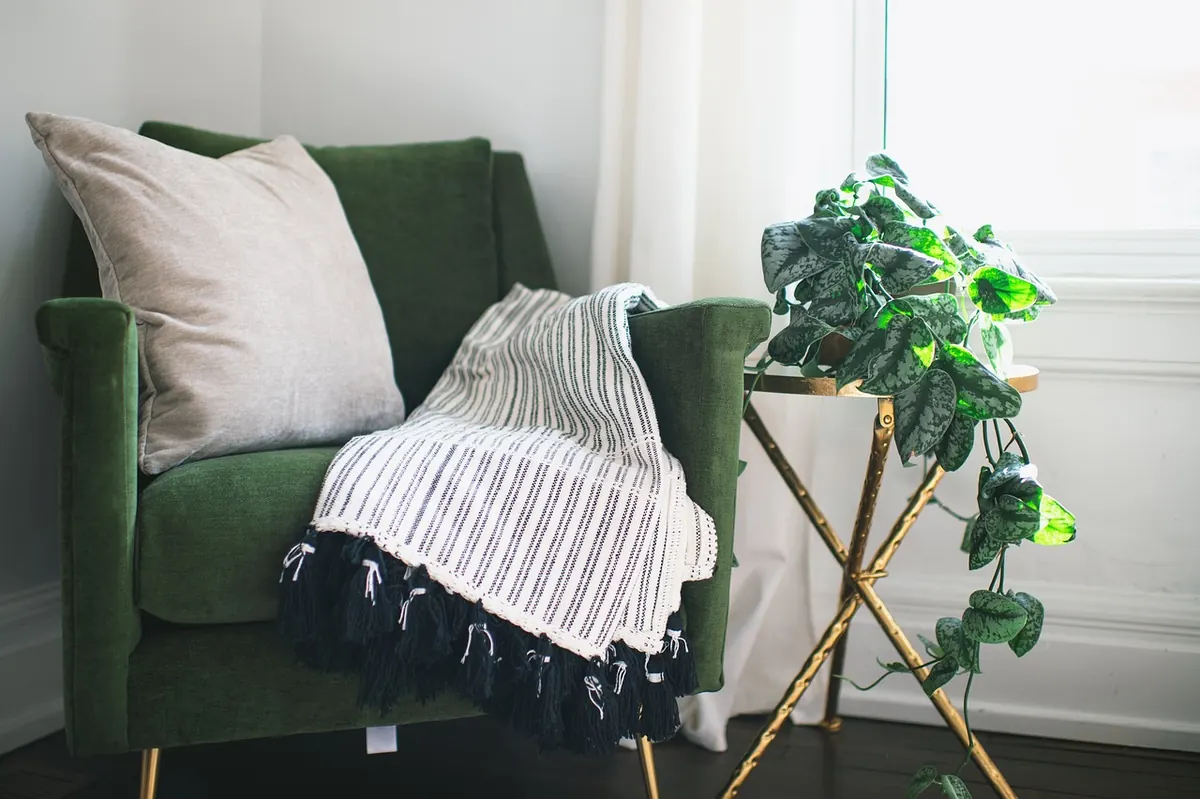
Biophilic design has a grand name for a fairly simple idea: we feel better in rooms that behave a little more like the outside. Not a jungle wedged into the corner, not a wall of preserved moss, just daylight that reaches the chair you actually sit in, materials that show their grain and age, something green to rest your eyes on. The term is having a moment, but the instinct behind it is old. Here is what it means in practice, and how to bring it home without ripping anything out.
What biophilic design actually means
The word comes from biophilia — the idea, popularised by the biologist E. O. Wilson, that humans have an innate tendency to seek connections with nature. In design terms, that translates into shaping buildings and interiors so those connections are easy to make: light where you need it, views that give your eyes somewhere to go, materials that came out of the ground or off a living thing.
It helps to understand what it is not. Biophilic design is not a style, a colour palette or a shopping list. A Georgian sash window with a view of a plane tree and a 1960s concrete flat with a deep balcony full of herbs can both be biophilic. It is a set of decisions about light, texture, air and sightlines — which is why it works in a rented one-bedroom as readily as in a new build with a living roof.
The principles that do most of the work
Most schemes, whether a hospital atrium or a two-up two-down, lean on the same handful of ideas.
- Light: daylight first, and light that changes through the day rather than a single flat wash from a ceiling fitting.
- Views: something worth looking at beyond the walls — a tree, a hedge, a courtyard, a long garden, even a decent bit of sky.
- Materials: wood, stone, clay, lime plaster, wool, linen, rattan. Things that were recently alive, or dug up, or woven by hand.
- Pattern and shape: the gentle irregularity of grain, weave, dapple and curve. Straight lines and uniform surfaces are restful in small doses and numbing in large ones.
- Sensory detail: the sound of rain or leaves, the scent of herbs, the temperature of stone, moving air.
- Refuge: a seat with a wall behind it and a view ahead. People relax faster when they are not exposed on all sides.
You almost certainly have two or three of these already. The work is usually about strengthening what is there rather than adding something new.
Light is the element people get wrong
Ask anyone what biophilic design means and they will mention plants. Ask what actually changes how a room feels and the answer is usually daylight. A windowsill stacked with books, a heavy valance, a sofa parked across the brightest wall: these quietly undo everything else you do.
So start there. Clear the sills. Wash the glass, inside and out; it makes more difference than most people expect. Swap a heavy curtain for a linen or voile layer that lets light through and still gives privacy. Put a mirror on the wall opposite the window, angled so it catches sky rather than the neighbour's wheelie bin. If you need a hedge cut back to open up the view, check what you are allowed to do if you rent or if the boundary is shared.
Then look at artificial light. One bright overhead fitting at nine in the evening flattens a room and works against everything else here. Use three or four low lamps at different heights instead — a floor lamp, a table lamp, a small light on a shelf — and keep the colour warm. Dimmable is worth the extra.
Simple ways to bring nature indoors
None of this needs a builder or a budget to match.
Changes that cost nothing
- Rearrange so your main seat faces the window rather than the television.
- Open a window for ten minutes morning and evening, whatever the season. Moving air is part of the experience.
- Move furniture a hand's width away from the walls so the radiator can breathe and the room feels less compressed.
- Bring in a single cut branch, a few seed heads or a handful of herbs in a jar. Seasonal, free, and it changes the room's mood more than another cushion.
Changes worth a small spend
- Buy one plant that suits your light, not the one you like best. A dark north-facing corner will kill a succulent; a snake plant, a spider plant or a pothos will shrug it off. Ask at a proper nursery what suits the aspect you have.
- Group plants together. Three or four in one place read as a small green view. The same plants scattered around the room read as clutter.
- Swap one synthetic surface for a natural one. A wool rug, a linen throw, a wooden chopping block left out, a stone bowl. Touch matters as much as looks.
- Add a sound. A small water bowl with a trickle, or simply a window left open onto birdsong. Avoid piped nature recordings; they wear thin quickly.
- Let the seasons in. Forced bulbs in February, grasses in autumn, a bowl of quinces in October. Rooms that change with the year feel alive.
Biophilic design is less about how a room looks in a photograph and more about how it feels at seven in the morning in February.
Where it tends to go wrong
The most common mistake is buying the look without the conditions. A row of glossy plants in a windowless hallway, kept alive on hope, is worse than an empty shelf. Fake plants that never see a duster are the opposite of the point: they collect dust and add nothing.
The second mistake is overfilling. Biophilic rooms are usually calmer than the average interiors photograph, not busier. Two strong natural elements in a small room will do more than eight.
A practical note before you buy anything living: some popular houseplants are toxic to cats and dogs, so check with your vet or a knowledgeable plant supplier if you have pets. If dust, pollen or mould spores set off asthma or allergies, speak to your GP or pharmacist about what to keep, and keep it well ventilated rather than simply giving up on greenery.
Rented, small or north-facing
You can do all of this without touching the structure. Pale walls with a warm undertone bounce the light you have; cold grey fights it. A mirror, a shade-tolerant plant on a removable hook, a natural-fibre rug you can take with you when you leave. If the light is genuinely poor, lean harder on materials, texture and scent, and treat warm lamps as your daylight substitute. A north-facing room with wool, wood, a brass lamp and one healthy fern will beat a bright room crammed with plastic.
Start with one corner
Pick the corner with the best light and the chair you use most. Clear the windowsill. Move the chair slightly so it looks out rather than in. Add one plant that suits the aspect, one thing you enjoy touching, and one warm lamp for the evening. Live with it for a week and notice whether you gravitate there. Then do the same in the next room. Biophilic design rewards that slow, one-corner-at-a-time approach far more than a weekend overhaul — and it costs considerably less.
Photo: Space_Zandria / Pixabay